
Startups working on physical products often need to move quickly from concept to iteration. For components like custom silicone seals, selecting the right manufacturing process early can make a significant difference in both speed and cost. Compression molding offers a reliable and flexible solution for prototyping and low-volume production, especially when teams need to experiment with different silicone properties before committing to full-scale manufacturing.
This approach is particularly useful for testing variations in material performance, visual aesthetics, and functional fit. Whether developing a medical device, consumer product, or an industrial component, startups can use compression molding to validate ideas, fine-tune designs, and reduce the risk of costly redesigns later in the process.
Why Startups Choose Compression Molding
Compression molding is often the first step for startups needing real-world validation of silicone components. Unlike injection molding, which requires significant upfront investment in tooling, compression molding uses simpler, less expensive molds that can be fabricated quickly. This allows teams to prototype without overcommitting resources early in development.
Because the process accommodates a wide range of silicone materials, it enables early testing of performance characteristics such as flexibility, compression set, and thermal resistance. For startups working with evolving product requirements, this flexibility is a critical advantage.
Compression molding also supports the production of functional parts in small batches. This makes it possible to conduct user testing, perform in-house evaluations, and even run limited pilot programs without having to wait for high-volume tooling or automation.
Testing Material Properties, Colors, and Hardness
One of the biggest advantages of compression molding for startups is the ability to test a variety of silicone formulations without reworking expensive molds. Teams can evaluate how different materials perform under stress, exposure to heat or moisture, and repeated compression cycles. This is especially important for seals that must maintain consistent shape and performance over time.
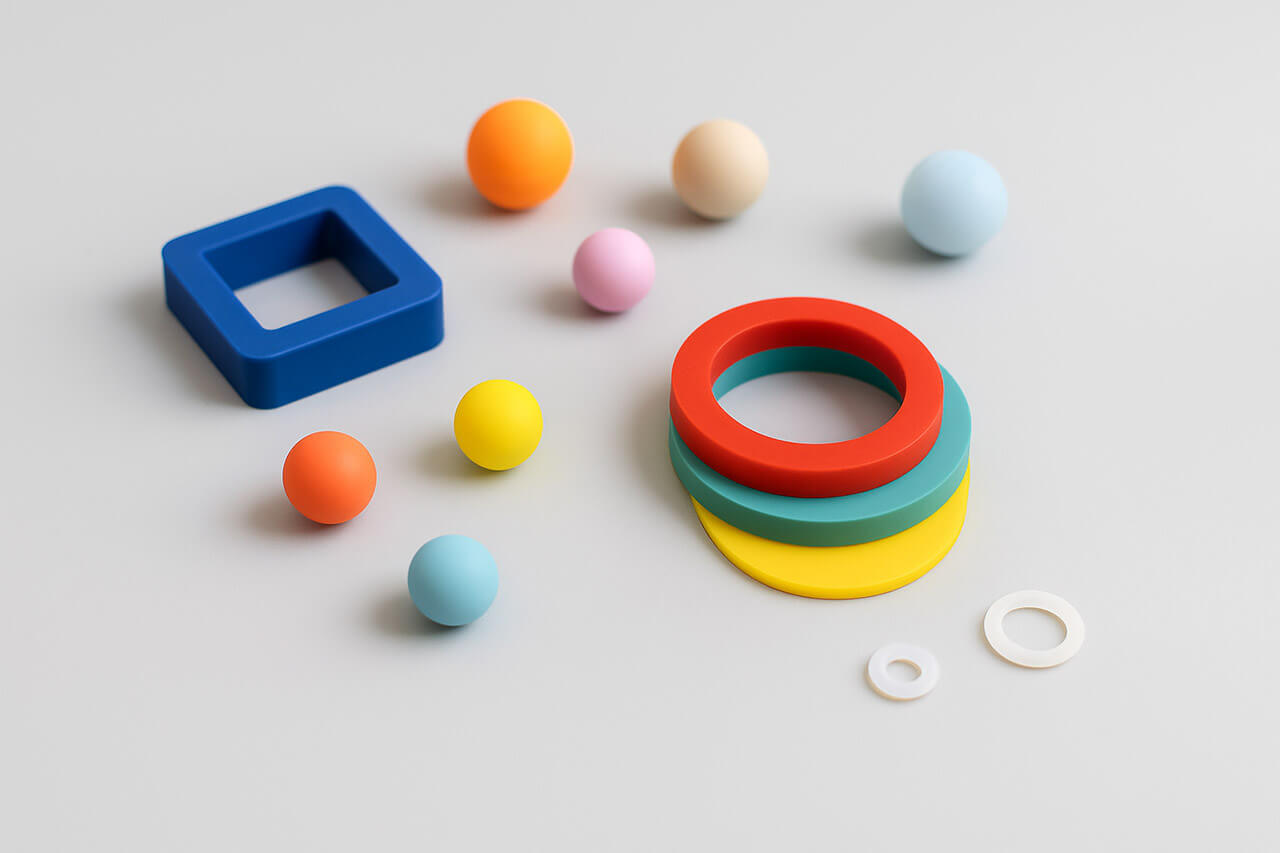
Color experimentation is also simple with compression molding. Startups developing consumer-facing products can trial different hues, finishes, and levels of translucency to align with branding or user preferences. Since no high-pressure injection is involved, pigments remain more stable during the cure cycle, resulting in predictable visual outcomes.
Perhaps most importantly, compression molding allows for quick trials across different shore hardnesses. Whether the application calls for soft and flexible or firm and durable silicone, teams can compare multiple durometers to fine-tune the tactile and mechanical performance of each seal. These experiments provide a strong foundation for choosing the final formulation when scaling up.
From Iteration to Production: Knowing When to Scale
Compression molding gives startups the runway to explore, test, and refine. But there comes a point when it makes sense to shift from iteration to scalable production. The key is recognizing when material selection, part geometry, and performance have been validated through enough rounds of prototyping.
Once teams see consistent results—both in the lab and in early use cases—they can move toward production tooling with confidence. At this stage, the data gathered during compression molding helps inform mold design, material sourcing, and manufacturing process selection. Startups can transition to injection molding, transfer molding, or remain with compression if the volumes and part design still align.
By front-loading the development process with hands-on trials, startups reduce the risk of costly redesigns later on. Compression molding becomes more than a prototyping method—it’s a strategic step in building reliable, production-ready silicone components.
Ready to Start Iterating?
For startups working on innovative products that rely on silicone components, compression molding offers a cost-effective, flexible path to iteration. It enables quick testing of different materials, shapes, and mechanical properties without committing to full-scale production too early.At Mina, we support early-stage teams through every phase of development—helping turn ideas into validated, production-ready components. If you’re exploring options for prototyping or small-batch silicone parts, contact us to discuss your project.
